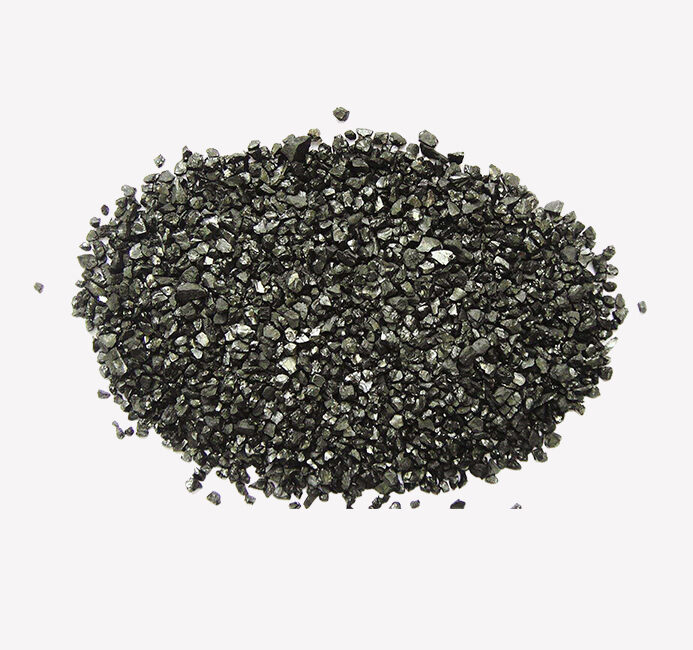
Activated carbon is an effective adsorbent because of its highly developed pore structure and large specific surface area. Its micropore volume typically ranges from 0.15 to 0.90 cm³/g, with micropores generally contributing more than 95% of the total surface area. Consequently, micropores provide most of the sites responsible for adsorption.
In liquid-phase applications, some adsorbate molecules may be too large to enter the smallest micropores directly. Mesopores—also called transitional pores—provide transport pathways that allow adsorbates to diffuse into smaller pores. Therefore, the quantity, size, and accessibility of mesopores can strongly influence diffusion rates and adsorption efficiency in liquid treatment processes.
Macropores usually make only a limited direct contribution to physical adsorption from liquids. However, they can be important when activated carbon is used as a catalyst support, where they improve fluid transport and accessibility to active sites.
The performance of activated carbon depends substantially on the properties of the substance being removed. In general, compounds with lower water solubility are more readily adsorbed.
The adsorbate’s molecular size, chemical structure, polarity, ionization behaviour, and solubility all affect its affinity for activated carbon. Selecting an appropriate carbon grade therefore requires consideration of the specific target contaminant.
Adsorption is generally an exothermic process. As temperature rises, adsorption capacity typically decreases because adsorbed molecules have greater energy to leave the carbon surface.
Accordingly:
At low adsorbate concentrations, the adsorption isotherm is often approximately linear. This indicates that a significant proportion of the activated carbon surface remains available for adsorption. Under these conditions, increasing the contaminant concentration can produce a substantial increase in the amount adsorbed.
As concentration increases:
Adsorption rate depends on both the activated carbon and the adsorbate. The time required to reach equilibrium varies according to factors such as pore structure, particle size, contaminant properties, concentration, temperature, and mixing conditions.
Adequate contact time should therefore be included in process design to allow the target compounds to diffuse into the pore network and achieve the desired removal efficiency.
Wastewater pH can significantly influence activated-carbon adsorption performance. pH affects the chemical form of many compounds in water, including whether they are present as:
These forms can have very different affinities for activated carbon. In many cases, neutral and less water-soluble molecular forms are adsorbed more readily than highly ionized forms. pH may also affect the surface charge and functional groups of the activated carbon itself, further influencing adsorption efficiency.
For product selection or technical guidance, contact Henan CarbonFresh Activated Carbon Co., Ltd. to discuss your waste gas conditions and activated carbon requirements.